Refinancing Equipment: What You Need To Know
What is equipment refinancing?
Equipment refinancing involves leveraging your essential-use business equipment (owned outright, or with remaining debt) as collateral to secure a new loan, lease or EFA. The new financing replaces or restructures the old debt, often paying off existing loans or leases and potentially providing extra cash. It’s an asset-based strategy that uses the current market value of your equipment, machinery, work vehicles, or machine tools to unlock liquidity without selling your assets.
There are primarily two main scenarios where equipment refinancing commonly occurs:
- Scenario 1: Equipment with existing financing – The business has an outstanding loan or lease on the equipment. The new refinancing pays off the current lender (or lessor), replacing the old terms with potentially more favorable ones. This restructures the debt while keeping the equipment in use.
- Scenario 2: Equipment owned free and clear – The business owns the equipment outright (no liens or remaining debt). In this case, the equipment serves as collateral for a new loan or lease (often structured as an equipment sale-leaseback), allowing the business to access cash or liquidity while continuing to operate the asset.
Key Benefits of Equipment Refinancing:
Equipment refinancing is a powerful tool for businesses looking to optimize their finances, improve liquidity, and support growth.
By leveraging the current market value of owned equipment, companies can achieve several key advantages:
-
Lower Monthly Payments on Current Debt
Refinancing often extends the repayment term or secures a more favorable interest rate (especially when market conditions improve), resulting in significantly reduced monthly payments. This immediate relief eases cash flow pressure and allows more funds to stay in the business. -
Improve Cash Flow
Lower payments translate to more predictable and available monthly cash. This increased liquidity helps cover operating expenses, payroll, inventory purchases, or unexpected costs without straining reserves. -
Unlock Working Capital
When equipment has built-up equity (its fair market value exceeds any remaining debt), refinancing can provide a lump-sum cash payout. This non-dilutive capital can be used for expansion, hiring, marketing, or other business investments. -
Accounting or Tax Benefits
Consolidating multiple loans into one simplifies bookkeeping and financial reporting. Additionally, interest on the new financing is typically tax-deductible as a business expense. In some cases, refinancing may also allow for optimized depreciation or deduction timing – consult your tax advisor for specifics. -
Cash-Out the Equity in Your Equipment
Similar to a home equity loan, refinancing lets you access the value you’ve built in your assets without selling them. This provides flexible, asset-backed capital while you continue using the equipment in daily operations. -
Exit a Current Lending Relationship
If you’re dissatisfied with your existing lender – due to high rates, poor service, restrictive covenants, or an upcoming balloon payment – refinancing allows you to pay off the current debt and transition to a more suitable financing partner. -
Restructure Current Debt
Extend loan terms to better align with the equipment’s useful life, eliminate end-of-lease balloon payments, or adjust repayment schedules to match your current cash flow patterns, making the debt more sustainable over the long term. -
Consolidate Multiple Loans/Lenders into One
Combine several equipment loans (or even mix with other business debts) into a single payment. This reduces administrative burden, minimizes overall fees, and makes tracking and budgeting much simpler.
These benefits can frequently overlap…a single refinance can deliver lower payments, extra cash, and streamlined debt all at once. The result is greater financial flexibility, allowing your business to focus on growth rather than debt management.
Real-World Examples: How Refinancing Equipment Powers Business Growth
These anonymized case studies illustrate how companies across different industries have used equipment refinancing with Viking Equipment Finance to address specific challenges, unlock capital,
and drive growth.
1. Appalachian Basin Oilfield Mechanic Services Company
A rapidly expanding oilfield services company in the Appalachian Basin took on several Merchant Cash Advance (MCA) loans to support growth. Those MCA loans carried effective interest rates
exceeding 50%, severely impacting cash flow. By refinancing his free-and-clear service trucks, we provided a $235,000 cash-out refinance. This fully paid off the high-cost MCA loans and freed up
approximately $10,000 per month in improved cash flow.
2. Multinational Mining Company (Kentucky Operations)
A large multinational mining operation had recently acquired an idled coal processing plant in Kentucky and required substantial capital to restart production and operations. Leveraging the
equity in the plant’s machinery and infrastructure, we structured a refinancing that raised $12 million in working capital. The transaction closed in just 35 days, enabling the company to resume
operations quickly and avoid costly delays.
3. Large Midwest Farmer
During peak harvest season, a substantial Midwest farming operation needed immediate working capital to cover labor, fuel, and other essential costs to harvest their crops. We completed a
cash-out refinance on one of their many tractors, delivering $250,000 in funding within 7 days. This timely liquidity ensured a smooth and uninterrupted harvest without disrupting operations or
turning to high-cost alternatives.
4. Mid-Sized Southeastern Construction Company
A growing construction firm in the Southeast had invested heavily in new yellow iron (excavators, loaders, bulldozers, dump trucks) over the past 3 – 4 years, financing purchases through multiple
OEM lenders (Caterpillar, John Deere, Komatsu, etc.). They built substantial equity in the fleet, but the company was managing over 50 separate loans with high combined monthly payments. Through
equipment refinancing, we consolidated all 50+ loans into a single new facility. We also provided $5 million in additional working capital while reducing the overall monthly payment by $50,000.
The result: significantly improved cash flow, simplified financial management, and greater capacity to pursue larger projects…all while retaining full use of the equipment.
5. Colorado Directional Drilling Contractor
A directional drilling company in Colorado secured a major new contract for fiber optic cable installation but needed capital quickly to hire 10 additional employees and mobilize resources. By
refinancing one of their directional drills, we provided $200,000 in working capital. This enabled them to start the project on schedule and position the business for continued expansion in a
growing sector.
These examples demonstrate the versatility of equipment refinancing – whether consolidating multiple loans, cashing out equity, reducing payments, eliminating high-interest debt, or providing
rapid capital – tailored to the unique needs of businesses in construction, energy services, mining, agriculture, and utilities.
Frequently Asked Questions About Equipment Refinancing:
1. What is equipment refinancing, and how is it different from regular equipment financing?
Equipment
refinancing uses your existing business equipment (owned outright or with remaining debt) as collateral to secure new financing – often replacing old loans/leases with better terms or providing
extra cash. Unlike standard equipment financing (used to buy new assets), refinancing focuses on unlocking equity in what you already own, without selling your equipment. Viking will consider
used, older, or specialized equipment that banks often decline.
2. What are the main benefits of refinancing my equipment?
Businesses refinance to lower monthly payments, improve cash flow, unlock working capital, cash out equity, consolidate multiple loans into one, restructure debt, exit unfavorable lenders, or
gain accounting/tax advantages (e.g., deductible interest). It helps preserve operations while funding growth, emergencies, or expansion.
3. What types of equipment can be refinanced?
We handle a wide range: construction (yellow iron), mining, agricultural, oil & gas, manufacturing, transportation (trucks/trailers), drilling, industrial machinery, machine tools, and more.
Viking excels with used, older, or specialized assets that most lenders often pass on.
4. What are the requirements, and do they change based on the amount?
Yes – requirements scale with size for efficiency:
- Small-Ticket ($50,000–$300,000): 3 months bank statements; 550+ FICO
- Mid-Ticket ($300,000–$1 million): 2 years tax returns, 3 months bank statements; 600+ PayNet
- Big-Ticket ($1 million–$50 million): 3 years financial statements, current YTD
(*All need an Application and Equipment List (with full details) and 2+ years time in business.)
5. How long does the refinancing process take?
Timelines vary by size and complexity, but Viking’s expertise in used equipment allows quick decisions – often faster than banks. Small-ticket deals can close in days; mid-ticket and big-ticket
may take a few weeks. We aim to expedite funding to meet your needs and timelines.
6. Can I refinance equipment that’s already financed or leased?
Yes – common scenarios include paying off existing lenders (banks, captives, leases) and restructuring terms and potentially pulling equity/working capital from your currently owned
equipment.
7. Are there any fees or costs involved?
Costs/fees to close an equipment refinancing transaction largely depend on the size of the transaction. For example, our Small & Mid-Ticket program normally has a Documentation Fee and
an Inspection Fee paid prior to or at closing. Our Big-Ticket program will require an equipment appraisal and due diligence fee to be paid upfront to perform the required underwriting
process. We work to minimize surprises – terms are transparent upfront. Interest rates depend on credit, equipment, and market conditions; we aim for competitive options.
8. Is equipment refinancing right for my business?
If you have equity in your equipment, need better terms, cash for growth/expansion, or want to simplify your debt structure…refinancing your equipment can help. If you’re facing high payments,
balloon payments, or limited bank options for used equipment, refinancing your equipment can be a smart financial decision.
9. Do all equipment lenders offer cash-out equipment refinancing?
No, far from it…While many equipment lenders provide refinancing options to restructure existing debt, lower monthly payments, extend terms, or pay off current loans/leases, true cash-out
refinancing – where the business receives a significant lump-sum payout of additional working capital beyond simply paying off existing balances – is not offered by all lenders, and in fact is
relatively uncommon.
Reasons this feature is limited:
- Many mainstream banks, captive finance companies (e.g., OEM lenders like Caterpillar Financial, John Deere Credit), and some independents focus primarily on purchase financing (funding new equipment) or rate-and-term refinancing (replacing old debt with new debt on similar or better terms without extra cash).
- Cash-out equipment refinancing involves advancing funds against equity in existing (often older or used) equipment, which carries higher perceived risk for the lender – depreciation, market value fluctuations, and the need for accurate appraisals or liquidation values make it less attractive to more conservative providers.
- Lenders that do offer meaningful cash-out equipment refinancing typically specialize in asset-based lending, have deep experience of valuing used equipment, and are willing to advance a percentage of the equipment’s current market value after paying off any existing liens. We focus on recent auction results to determine market value and advance rates.
In practice, businesses frequently discover that even lenders who advertise “equipment refinancing” may only allow minimal or no additional cash proceeds, restricting the transaction to a straight payoff and restructure. Viking Equipment Finance is one of a few equipment finance companies that can structure cash-out equipment refinances, enabling companies to unlock substantial equity for growth, operations, working capital, debt consolidation, or other business needs.
Next Steps: Unlock The Equity in Your Equipment Today
Equipment refinancing empowers businesses to lower payments, boost cash flow, restructure debt, and access real working capital – often through true cash-out options that many lenders limit or
avoid. Viking Equipment Finance specializes in refinancing equipment, machinery, work trucks and machine tools maximizing your asset value so you can fuel growth without selling your
machinery.
Ready to see how much equity is in your equipment? Call Viking Equipment Finance at 972-885-8899 or email your Application and Equipment List to [email protected] for
a fast, no-obligation review – we’ll contact you promptly to explore tailored solutions.
Find the original article on our main blog here from February 1, 2026
Equipment Sale Leasebacks: The IRS & FASB
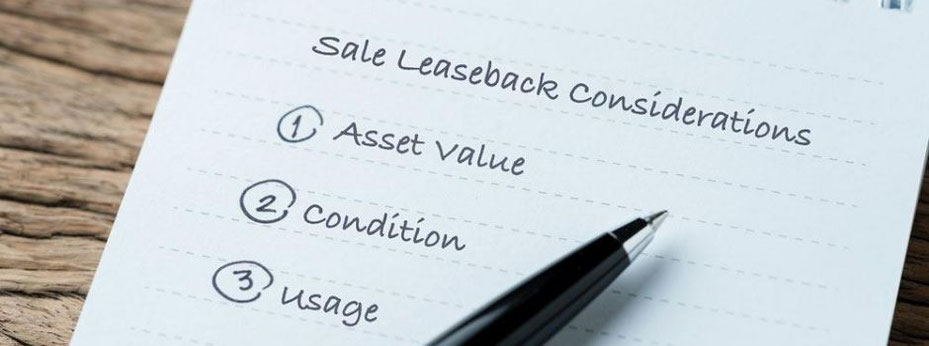
What is an Equipment Sale Leaseback?
An equipment sale leaseback is a financial arrangement where a company sells its equipment to a leasing company or financial institution and then immediately leases it back for continued use. Essentially, it’s a way for a business to free up cash tied to equipment it owns while still retaining access to that equipment for its operations.
Here’s how it typically works: the company sells the equipment at its current market value, receiving a lump sum payment. Then, it enters into a lease agreement with the buyer to rent the equipment back, usually paying lease payments over a set term. At the end of the lease, depending on the terms, the company might have the option to repurchase the equipment, renew the lease, or return it.
This setup can be useful for businesses needing liquidity—say, to pay off debt, fund expansion, or manage cash flow—without losing the ability to use critical assets like machinery, vehicles, or tech hardware. It’s kind of like turning a fixed asset into working capital while keeping operations running smoothly. The downside? You’re committing to lease payments, and over time, that might cost more than the original sale proceeds, depending on the terms and interest rates baked into the deal.
IRS Considerations
When it comes to IRS tax considerations for an equipment sale-leaseback, there are several key points to keep in mind. The tax implications depend on how the transaction is structured and how the IRS views it—whether as a true sale and leaseback or as something else, like a disguised loan. Here’s a breakdown:
1. Sale of the Equipment
- Capital Gains Tax: When you sell the equipment to the leasing company, the IRS treats it as a sale of a business asset. If the sale price exceeds your adjusted basis (original cost minus depreciation), you’ll likely owe capital gains tax on the difference. For example, if you bought a machine for $100,000, depreciated it down to $40,000, and sold it for $80,000, you’d have a $40,000 taxable gain.
- Recapture of Depreciation: If you’ve taken depreciation deductions on the equipment, part of the gain might be taxed as ordinary income rather than capital gains under Section 1245 rules. This “depreciation recapture” applies to the extent you’ve previously deducted depreciation, and it’s taxed at your ordinary income tax rate, which could be higher than the capital gains rate.
2. Lease Payments
- Deductibility: The lease payments you make to rent the equipment back are generally tax-deductible as a business expense under Section 162, assuming the lease is a true operating lease. This can offset your taxable income, which is a big perk—especially if the equipment is still essential to your operations.
- Operating vs. Capital Lease: The IRS distinguishes between an operating lease (treated as a rental) and a capital lease (treated more like a purchase). If the lease term is too close to the equipment’s useful life, or if you have an option to buy it back at a bargain price, the IRS might reclassify it as a capital lease. In that case, you’d lose the ability to deduct lease payments outright and instead have to depreciate the equipment again, which could complicate things.
3. Ownership and Substance Over Form
- The IRS looks at the “substance” of the transaction, not just its label. If they determine the sale-leaseback is really a financing arrangement (e.g., you retain too much control or the terms suggest you never truly gave up ownership), they might disallow the sale treatment. You’d keep depreciating the equipment and treat the cash received as a loan, with lease payments split between deductible interest and non-deductible principal repayment.
- Factors they consider include: who bears the risk of loss, who pays for maintenance, and whether the lease terms effectively guarantee you’ll reacquire the equipment.
4. Potential Benefits
- Cash Flow Without Losing Deductions: By selling the equipment, you get immediate cash, and if structured right, the lease payments keep flowing as deductible expenses. This can be a tax-efficient way to manage liquidity.
- Avoiding Double Taxation: If done properly, you avoid owning the asset while still using it, sidestepping property taxes or other ownership-related costs that might apply in some states (though this varies).
5. Risks and Pitfalls
- Audit Scrutiny: The IRS sometimes flags sale-leasebacks for review, especially if the sale price seems inflated or the lease terms look suspicious. Documentation matters—keep appraisals, lease agreements, and business purpose justifications airtight.
- Loss of Depreciation: Once you sell, you can’t claim further depreciation on the equipment unless the lease gets reclassified as a capital lease, which might not be what you want.
Practical Example: Say your company sells a $200,000 piece of equipment (fully depreciated, so basis is $0) for $150,000 and leases it back for $3,000/month over 5 years. You’d report a $150,000 gain, likely as ordinary income due to depreciation recapture, taxed at your business rate (e.g., 21% for a C-Corp, so $31,500 in tax). Then, you deduct $36,000/year in lease payments, saving you taxes on that amount annually (e.g., $7,560/year at 21%). Over time, the deductions could offset the initial tax hit, but you’d need to crunch the numbers based on your rate and timeline.
Conclusion: The IRS is fine with sale-leasebacks as long as they’re legit—real ownership transfer, fair market value, and a genuine lease. Consult a tax pro to structure it right, especially for big-ticket items, because missteps can trigger reclassification or penalties.
FASB Considerations
When addressing Financial Accounting Standards Board (FASB) considerations for an equipment sale-leaseback, the focus is on how the transaction is accounted for under U.S. Generally Accepted Accounting Principles (GAAP), specifically ASC 842, the current standard for leases. A sale-leaseback occurs when a company sells an asset, like equipment, and then leases it back from the buyer, allowing it to free up capital while retaining use of the asset. Here’s a comprehensive look at the key FASB considerations:
1. Determining if the Transaction Qualifies as a Sale
To account for the transaction as a sale, FASB requires that control of the equipment transfers to the buyer-lessor. This aligns with the revenue recognition principles in ASC 606 and includes criteria such as:
- The buyer-lessor must have the ability to direct the use of the equipment.
- The buyer-lessor must obtain substantially all the remaining economic benefits from the equipment.
If these conditions are not met, the transaction does not qualify as a sale and is instead treated as a financing arrangement.
2. Classification of the Leaseback
The leaseback’s classification—either as an operating lease or a finance lease—is critical under ASC 842:
- Operating Lease: Indicates the seller-lessee has relinquished control, allowing the transaction to be treated as a sale.
- Finance Lease: Suggests the seller-lessee retains significant control, resulting in a “failed sale” where the transaction is accounted for as financing.
The classification depends on factors like the lease term, present value of lease payments, and whether the lease includes options that mimic ownership (e.g., a purchase option at a bargain price).
3. Accounting Treatment Based on Classification
The accounting treatment hinges on whether the transaction is a sale and the leaseback type:
If the Leaseback is an Operating Lease (True Sale):
- Derecognize the Equipment: Remove the equipment from the seller-lessee’s balance sheet.
- Recognize Gain or Loss: Record any difference between the sale price and the equipment’s carrying value immediately.
- Lease Accounting: Recognize a right-of-use (ROU) asset and lease liability based on the present value of lease payments, with payments expensed over the lease term.
If the Leaseback is a Finance Lease (Failed Sale):
- Retain the Equipment: Keep the equipment on the balance sheet, continuing to depreciate it.
- Financial Liability: Record the sale proceeds as a liability (akin to a loan), not revenue.
- Payments: Allocate lease payments between interest expense and liability reduction over time.
4. Additional Considerations
- Repurchase Options: If the seller-lessee has an option to repurchase the equipment (e.g., at a price below fair value), it may prevent the transaction from qualifying as a sale, leading to financing treatment.
- Disclosure Requirements: ASC 842 mandates disclosures about sale-leaseback transactions, including terms, financial statement impacts, and recognized gains or losses.
Practical Example: Imagine your company sells equipment with a carrying value of $100,000 for $120,000 and leases it back:
- Operating Lease: You’d recognize a $20,000 gain, remove the equipment from your balance sheet, and record an ROU asset and lease liability for the leaseback.
- Finance Lease: You’d keep the equipment on your books, record the $120,000 as a liability, and account for payments as financing costs, not a sale.
Conclusion: FASB considerations for an equipment sale-leaseback center on verifying the transfer of control and correctly classifying the leaseback. Proper application of ASC 842 ensures the transaction reflects its economic substance—either as a sale with an operating lease or a financing arrangement with a finance lease. Given the complexity, consulting an accounting professional is advisable to ensure compliance.
Find the original article on our main blog here from March 2, 2025
Buying an Excavator: What You Need to Know
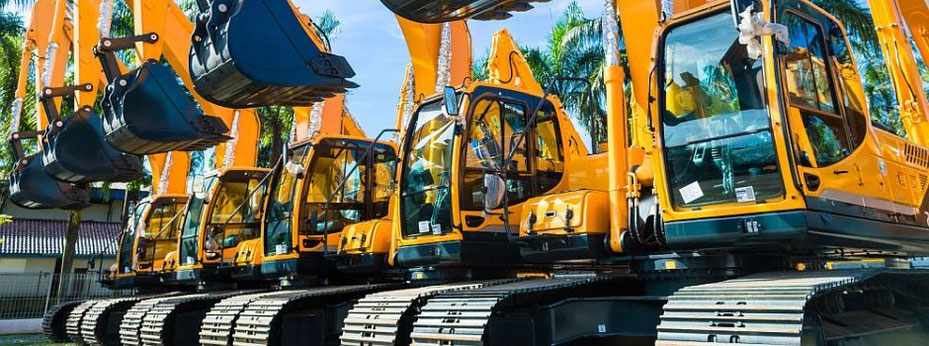
Purchasing an excavator is a major financial commitment, so it’s essential to familiarize yourself with the buying process and make a well-informed choice. Below is a general guide to help you navigate buying and financing an excavator:
- Determine Your Needs: Before buying a excavator, you need to determine the type of excavator you need for your current and future projects.
There are several types of excavators available, including crawler excavators, wheel excavators, dragline excavators, mini excavators and skid steer excavators. Each type of excavator has its own
advantages and disadvantages, so it’s important to choose the one that is best suited for your short and long term needs.
- Choose an Excavator Dealer: Once you have determined the type of excavator you need, you should choose a reputable dealer. Look for a supplier
that has experience in the industry and offers quality excavators. You can ask for referrals from other contractors or search online for reviews and ratings.
- Shop the Auctions: Purchasing a used excavator at an auction can be a more affordable option for those on a tight budget. However, it is important to thoroughly inspect the excavator before making a purchase to ensure it is in good working condition. Depending on the age of the excavator, most lenders will finance excavators purchased at an auction house.
- Check the Excavator’s Condition: Before finalizing the purchase, it’s important to check the excavator’s condition thoroughly. You should
inspect the excavator’s structural integrity, mechanical components, electrical system, and safety features. If possible, you should also test the excavator’s performance to ensure it’s in good
working condition.
- Determine the Total Cost: In addition to the purchase price of the excavator, you should also consider the cost of transportation,
installation, maintenance, and insurance. These costs can add up quickly, so it’s important to factor them into your budget.
- Choose a Financing Option: Once you have determined the total cost of the excavator, you should consider your excavator financing options. You can choose to pay for the excavator in cash, obtain a loan from a bank or financial
institution, lease or rent the excavator.
- Cash Payment: If you have sufficient cash reserves, you may choose to pay for the excavator upfront. This option provides the advantage of
avoiding interest payments and owning the excavator outright.
- Bank Loan: If you don’t have enough cash reserves, you may obtain a loan from a bank or financial institution. The loan amount and interest
rate will depend on your credit score, business history, and collateral. You should compare the interest rates and terms of different lenders to choose the one that suits your needs.
- Lease: If you don’t want to commit to a long-term investment, you can choose to lease the excavator. Leasing provides the advantage of lower
monthly payments and flexibility to upgrade or return the excavator at the end of the lease term. However, you won’t own the excavator at the end of the lease, unless the lease has end of term
purchase options.
- Finalize the Purchase: Once you have chosen the financing option, you should finalize the purchase. You should review and sign the purchase
agreement, financing agreement, and any other legal documents. You should also make the necessary payments and obtain the necessary permits and insurance.
- Maintenance and Operation: After buying your excavator, it’s important to maintain and operate it properly. You should follow the manufacturer’s recommendations for maintenance, hire qualified operators, and ensure the excavator is operated safely and efficiently. This will help prolong the lifespan of the excavator and minimize downtime and repair costs.
Should I Buy a New or Used Excavator?
The decision to buy a new or used excavator depends on a variety of factors, including your budget, the purpose of the excavator, the expected usage, and the availability of financing.
If you have a higher budget and require a excavator with the latest technology, a new excavator may be the better option. New excavators often come with warranties and maintenance packages, which can give you peace of mind and ensure that the excavator operates reliably. Additionally, a new excavator can offer the latest safety features and meet the most current industry standards.
However, if your budget is more limited or you don’t need the latest technology, a used excavator could be a more cost-effective option. Used excavators are often significantly cheaper than new excavators, which can save you a lot of money upfront. Additionally, used excavators that have been well-maintained and inspected can still provide reliable and safe operation.
Ultimately, the decision to buy a new or used excavator will depend on your specific needs and circumstances. Before making a decision, you should thoroughly research the options available to you, consult with experts in the field, and weigh the pros and cons of each choice.
Popular Websites to Buy Excavators:
When purchasing an excavator, several websites offer a wide selection of new and used machinery. Here’s a list of some of the most popular websites to buy excavators:
- MachineryTrader.com – One of the most comprehensive platforms for buying and selling construction equipment, including new and used excavators from various manufacturers.
- RBAuction.com – Ritchie Bros is a global marketplace for heavy equipment, including excavators. Ritchie Bros. holds online and live auctions and has a massive inventory from top brands.
- IronPlanet.com – IronPlanet specializes in used heavy equipment, offering detailed inspection reports, bidding options, and buy-it-now features for a wide range of excavators.
- EquipmentTrader.com – Offers a marketplace for new and used heavy equipment, including excavators, with a focus on local listings.
- CatUsed.cat.com – Caterpillar’s official used equipment website, featuring high-quality used excavators, often with warranty options.
- MyLittleSalesman.com – A well-established marketplace for construction equipment with listings for new and used excavators from various dealers and private sellers.
- Facebook.com/Marketplace – A leading marketplace for private party equipment sales.
Each of these websites offers different buying options, from direct purchases to auctions, providing flexibility for different needs and budgets. It’s always a good idea to do your research and compare prices and features before making a purchase. Additionally, be sure to check the seller’s reputation and read customer reviews before making a purchase to ensure that you are getting a quality excavator.
Excavator Financing Options:
There are several financing options available for companies looking to purchase an excavator:
- Bank Loans: Traditional bank loans are a common financing option for purchasing an excavator. Banks typically offer competitive interest rates and repayment terms that can range from several months to several years.
- Equipment Financing: Some lenders specialize in providing financing for equipment purchases, including excavators. These lenders may offer more flexible repayment terms or better rates and terms compared to other financing options.
- Equipment Leasing: Leasing an excavator can be a cost-effective way to access the equipment without a large upfront investment. Leasing terms can range from short-term rentals to long-term leases, and some may include maintenance and repair services.
When considering financing options for an excavator purchase, it is important to carefully evaluate each option and compare interest rates, repayment terms, and any additional fees or charges. It may also be helpful to consult with a financial advisor or accountant to determine the best financing option for your specific situation.
Find the original article on our main blog here from September 29, 2024
Buying a Crane: What you Need to Know
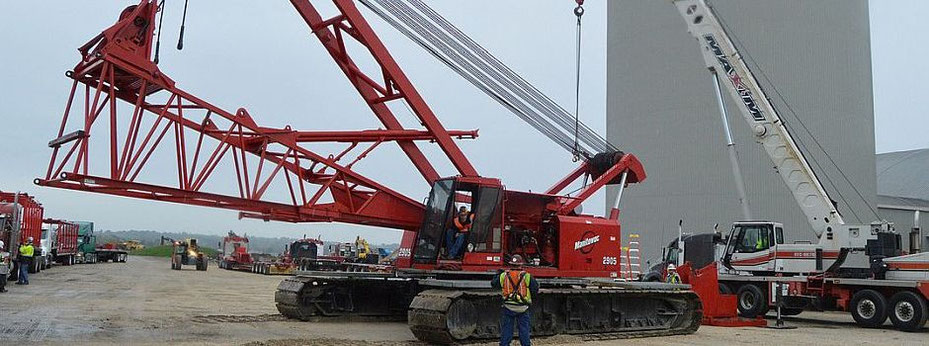
Buying a crane can be a significant investment, so it’s important to understand the process and make an informed decision. Here is a complete guide to buying and financing a crane:
- Determine Your Needs: Before buying a crane, you need to determine the type of crane you need for your current and future projects. There are
many types of cranes available, including tower cranes, mobile cranes, crawler cranes, and overhead cranes. Each type of crane has its own advantages and disadvantages, so it’s important to
choose the one that is best suited for your short and long term needs.
- Choose a Crane Supplier: Once you have determined the type of crane you need, you should choose a reputable supplier. Look for a supplier that
has experience in the industry and offers quality cranes. You can ask for referrals from other contractors or search online for reviews and ratings.
- Check the Crane’s Condition: Before finalizing the purchase, it’s important to check the crane’s condition thoroughly. You should inspect the
crane’s structural integrity, mechanical components, electrical system, and safety features. If possible, you should also test the crane’s performance to ensure it’s in good working
condition.
- Determine the Total Cost: In addition to the purchase price of the crane, you should also consider the cost of transportation, installation,
maintenance, and insurance. These costs can add up quickly, so it’s important to factor them into your budget.
- Choose a Financing Option: Once you have determined the total cost of the crane, you should consider your crane financing options. You can choose to pay for the crane in cash, obtain a loan from a bank or financial institution, or
lease the crane.
- Cash Payment: If you have sufficient cash reserves, you may choose to pay for the crane upfront. This option provides the advantage of avoiding
interest payments and owning the crane outright.
- Bank Loan: If you don’t have enough cash reserves, you may obtain a loan from a bank or financial institution. The loan amount and interest
rate will depend on your credit score, business history, and collateral. You should compare the interest rates and terms of different lenders to choose the one that suits your needs.
- Lease: If you don’t want to commit to a long-term investment, you can choose to lease the crane. Leasing provides the advantage of lower
monthly payments and flexibility to upgrade or return the crane at the end of the lease term. However, you won’t own the crane at the end of the lease, unless the lease has end of term purchase
options.
- Finalize the Purchase: Once you have chosen the financing option, you should finalize the purchase. You should review and sign the purchase
agreement, financing agreement, and any other legal documents. You should also make the necessary payments and obtain the necessary permits and insurance.
- Maintenance and Operation: After buying your crane, it’s important to maintain and operate it properly. You should follow the manufacturer’s recommendations for maintenance, hire qualified operators, and ensure the crane is operated safely and efficiently. This will help prolong the lifespan of the crane and minimize downtime and repair costs.
Should I Buy a New or Used Crane?
The decision to buy a new or used crane depends on a variety of factors, including your budget, the purpose of the crane, the expected usage, and the availability of financing.
If you have a higher budget and require a crane with the latest technology, a new crane may be the better option. New cranes often come with warranties and maintenance packages, which can give you peace of mind and ensure that the crane operates reliably. Additionally, a new crane can offer the latest safety features and meet the most current industry standards.
However, if your budget is more limited or you don’t need the latest technology, a used crane could be a more cost-effective option. Used cranes are often significantly cheaper than new cranes, which can save you a lot of money upfront. Additionally, used cranes that have been well-maintained and inspected can still provide reliable and safe operation.
Ultimately, the decision to buy a new or used crane will depend on your specific needs and circumstances. Before making a decision, you should thoroughly research the options available to you, consult with experts in the field, and weigh the pros and cons of each choice.
Popular Websites to Purchase a Crane:
There are several websites where you can purchase a crane. Here are some of the most popular:
-
CraneNetwork.com –
This is a great website for buying and selling new and used cranes of all types. It has a vast inventory of cranes from trusted brands and sellers.
-
Bigge.com –
Bigge Crane and Rigging Co. is one of the largest crane companies in the world, and their website is a great place to buy or rent a crane. They have an extensive inventory of cranes of all
sizes and types.
-
Mascus.com –
This is a global marketplace for heavy machinery, including cranes. You can find both new and used cranes from sellers all over the world.
-
IronPlanet.com –
This is another website that sells both new and used cranes, as well as other heavy equipment. They offer auctions and fixed-price listings, so you can find the right crane at the right
price.
- EquipmentTrader.com – This website has a large inventory of cranes for sale from dealers and private sellers. You can search by type, brand, location, and other criteria to find the perfect crane for your needs.
It’s always a good idea to do your research and compare prices and features before making a purchase. Additionally, be sure to check the seller’s reputation and read customer reviews before making a purchase to ensure that you are getting a quality crane.
Crane Financing Options:
There are several financing options available for businesses looking to purchase a crane:
- Bank loans: Traditional bank loans are a common financing option for purchasing a crane. Banks typically offer competitive interest rates and
repayment terms that can range from several months to several years.
- Equipment financing: Some lenders specialize in providing financing for equipment purchases, including cranes. These lenders may offer more
flexible repayment terms or better rates and terms compared to other financing options.
- Leasing: Leasing a crane can be a cost-effective way to access the equipment without a large upfront investment. Leasing terms can range from
short-term rentals to long-term leases, and some may include maintenance and repair services.
- Equipment auctions: Not really a financing option, but purchasing a used crane at an auction can be a more affordable option for those on a tight budget. However, it is important to thoroughly inspect the crane before making a purchase to ensure it is in good working condition. Depending on the age of the crane, most lenders will finance cranes purchased at an auction house.
When considering financing options for a crane purchase, it is important to carefully evaluate each option and compare interest rates, repayment terms, and any additional fees or charges. It may also be helpful to consult with a financial advisor or accountant to determine the best financing option for your specific situation.
Find the original article on our main blog here from April 20, 2023